OKR coaching that builds judgement.
A course teaches the theory. Coaching makes it stick. We work beside your leaders and teams through real cycles, on your actual goals, so the capability stays after we leave.
OKR coaching is hands-on guidance through real cycles, on your actual goals, rather than teaching in a classroom. The coach gives feedback in the moment and reviews the calls your people make, so the judgement stays with them.
The measure of a good engagement is how quickly you stop needing it.

Most leaders I coach already know the theory. They've read the book, sat through the training, can recite what a good Key Result looks like. What they haven't done is make the call, in the room, with the number moving the wrong way, and had someone reputable tell them whether they got it right.
That's what coaching is. Not a second training pass from someone who's only ever facilitated the workshop, a standing appointment with someone who has made the call themselves and watched hundreds of others make it. The judgement transfers because you're the one making the decision, every cycle, with feedback close enough to change how you think.
I know the engagement is working when you stop needing me. That's the only outcome I measure myself against.
Coaching, training, consulting or advice.
These four get sold interchangeably and they aren't interchangeable. Most companies need training first, coaching second, and consulting only when there is no system to coach against.
Scroll the table sideways on a narrow screen.
Twelve weeks, from the inside.
Before the cycle
We read what you already have: last quarter's goals, the check-in notes, the scorecard. Then one session with the leadership team on what this cycle is actually for. Most of the value in a coached quarter is decided here, before anyone writes an Objective.
Weeks one and two
Goal setting, coached live. Your leads draft, we push back in the room: that is a task, that number moves too slowly to learn from, nobody in this org can name who owns that. Drafts go back at least twice. It's the least comfortable and most useful fortnight of the quarter.
The middle weeks
We sit in real check-ins, fortnightly at first. The coaching is rarely about the framework by then. It's about the green that should be amber, the issue that has been carried for three weeks, and the conversation the lead is avoiding. Afterwards, ten minutes with the lead on how they handled it.
The end of the cycle
We coach the grading conversation rather than run it, because grading honestly is the hardest habit to build and the easiest to fake. Then the retrospective: what do we now believe that we didn't believe twelve weeks ago. Anything still fragile becomes the focus of the next cycle.
What a human coach does that an AI cannot.
We give an AI OKR coach away free, so this isn't a defence of the fee. For anything written down, the machine is tireless, instant and doctrinally exact, and you should use it. Here is the part it can't reach.
The system is blind at the point of entry
Software and an AI coach can review anything that gets typed in, tirelessly and to the letter of the method. Neither can see what never gets typed. A coach hears the wavering voice in a check-in, sees the green that is actually amber, and notices the lead avoiding the same conversation for the third week running.
Judgement transfer, through reps
The coach sits beside real decisions, lets the lead make the call, then reviews it afterwards: when to pivot, how to grade a messy quarter, how to run a red-confidence conversation without killing candour. The goal is a person who no longer needs the answer, which is the one outcome an answer machine can't produce.
Push-back with memory and stakes
“You're describing a task and calling it an outcome, again.” Said by someone who watched you do it last cycle and will be there next cycle. Memory plus stakes is what changes behaviour, and it's exactly what a fresh chat window doesn't have.
Why external, specifically
Fewer biases: not the boss, so honesty is safe and nobody has a stake in the coachee looking good. A forcing function: the session cadence becomes the practice cadence. And pattern relief: “every first-time OKR lead does this in week three” is something no colleague can offer.
The line we hold: the install coaches the artefact, the human coaches the person. The learning cycle corrupts exactly where honesty meets consequences, and that is a room problem, not a document problem.
Start at the top, finish with your own people.
The leadership team
First, always. Goals inherit their quality from the choices above them, and a leadership team that hasn't chosen can't be coached into good goals. This is usually where a coached quarter finds its real problem.
OKR leads and owners
The people who will run cycles after we leave. They get the most contact time, because they carry the practice. Coaching them is the whole return on the engagement.
Team leads
Once the leads are steady. Lighter touch, usually in the check-ins themselves rather than in separate sessions.
Your internal champions
The handover. By the end, one or two trained people inside the business hold the standard, and our sessions become their sessions with us watching.
Four things we watch for, none of them a score.
You will know coaching worked by behaviour, not by a completion percentage. These are the markers, roughly in the order they arrive.
A lead kills their own goal in week six
And says why, in writing, without asking permission. Stopping well is the last habit to arrive and the clearest sign the judgement transferred.
Confidence scores move before the numbers do
Amber appears in week four rather than week eleven. Your time to truth has shortened, which is the only early-warning system that actually works.
Somebody argues in a check-in
About a belief, with evidence, and nobody takes it personally. A silent check-in isn't a healthy one.
Goals get sent back
By your own people, before they reach us. The standard has moved inside the company, which means it will survive us leaving.
Engagement shapes.
One team, one cycle
The pilot. A single team, coached through a full cycle, so the company can see the difference rather than be told about it.
Best when there is scepticism to answer.
The leadership team only
Coaching the people who choose, not the people who execute. Often the highest-leverage version, and the shortest.
Best when the goals below are fine and the choices above are not.
Rollout support
Coaching alongside a wider rollout, several teams, through two cycles, with the champion handover built in from the start.
Best when the system is new and the stakes are visible.
On call
A standing slot per month once the capability is real, for the judgement calls that are rare enough not to need a coach full-time.
Best after two coached cycles.
Fixed fee, quoted after a short call. We would rather scope you smaller than sell a rollout you aren't ready for, and we will say so if training is the better first spend.
Eight straight answers.
Including what it costs, and when not to hire us.
What is OKR coaching? +
OKR coaching is hands-on guidance for your leaders and teams through real cycles, on your actual goals, rather than teaching in a classroom. A coach sits in your goal setting and your check-ins, gives feedback in the moment, and reviews the calls your people make afterwards. The point is judgement that stays in the business, not a system that depends on us.
What is the difference between an OKR coach, a consultant and a trainer? +
A trainer teaches the concepts, usually in a day. A consultant does the work with you and installs the system. A coach builds the judgement of the people who will run it, on live goals, over at least one cycle. Most companies need training first, coaching second, and consulting only if there is no system to coach against.
How long does OKR coaching take? +
One cycle to see a difference, two cycles for it to hold. A single quarter changes how goals are written; the second is where grading honestly, stopping goals well and running an uncomfortable check-in become normal. Anything shorter than a full cycle is training with a different name on the invoice.
How much does OKR coaching cost? +
We quote a fixed fee after a short call, because the honest answer depends on how many leads you're coaching and for how long. What we will say plainly: a leadership-only engagement is the cheapest useful version, a single-team pilot is the most common starting point, and we would rather scope you smaller than sell you a rollout you aren't ready for.
Do we need a coach if we already have OKR software? +
Software records what people decide. It can't tell you that the confidence score is optimistic, that the Key Result is a task, or that the leadership team never actually chose. Tools remove the admin, which is worth doing. They don't build the judgement, and most stalled rollouts we are called into have very tidy tooling.
Can an AI coach do this instead? +
For anything written down, largely yes, and we give one away free. An AI reviews drafts instantly and to the letter of the method, which is genuinely useful between sessions. It can't see what never gets typed: the wavering voice, the avoided conversation, the green that should be amber. That gap is where human coaching earns its fee, and it's not closing soon.
Should we use an internal or an external OKR coach? +
Build internal champions, and use an external coach to create them. An external coach has no reporting line, so honesty is safe, has no stake in anyone looking good, and can say “every first-time lead does this in week three”. Once your champions hold the standard, the external coaching should reduce and then stop.
What should we look for in an OKR coach? +
Someone who has run the cycles, not just read the books. Ask who they have coached, what they told a client to stop doing, and what they would refuse to sell you. A coach who can't name an engagement they scoped down, or a goal they told a client to kill, has been selling rather than coaching.
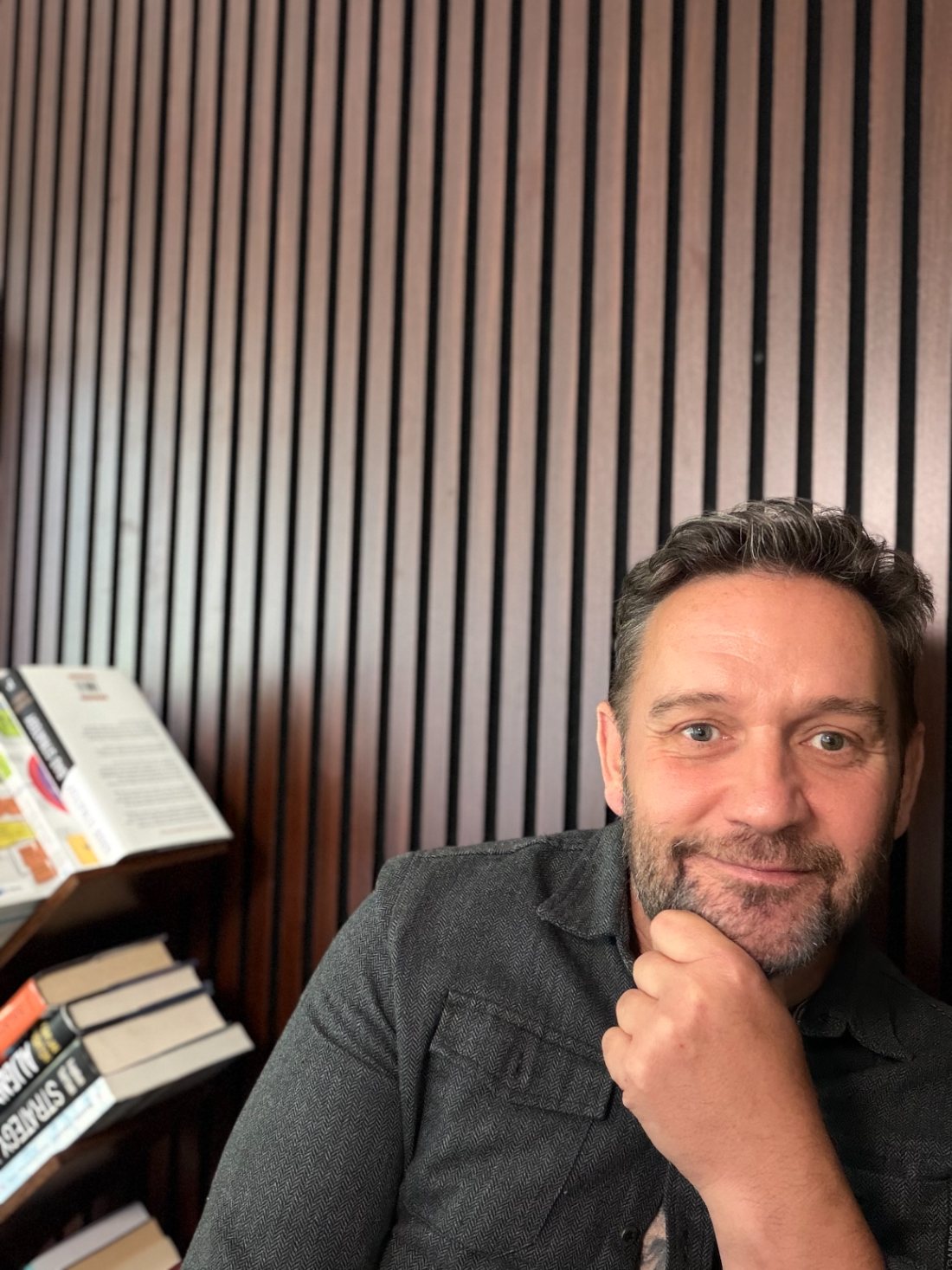
Matt Roberts, co-founder & lead consultant.
A two-time SaaS founder with a venture-backed exit, Matt turns strategy into execution for teams scaling from tens to thousands. He leads a team of eight senior consultants, so you get the right operator for your moment.
Human coaching, backed by AI trained on the same method.
We coach in person. Between sessions, the AI Business OS coach, trained on our OKR Knowledge System, reinforces the same thinking so it sticks. Both are optional and always in your tools. We meet you where you are, and never force our software or our method on you.
Coach your team to run OKRs brilliantly.
Start with a short look at where your cycles are getting stuck. We will tell you whether coaching, training or a full implementation is the right call, including when the answer is none of them.
Meet UsWhat changes while we're working with you
And a lot of them come from people and teams you weren't expecting.
They get looked at properly and answered, so the next lot arrives too. Nobody's idea disappears into a drive.
Real decisions about what becomes a goal, and where the money and the people go.
Then each goal gets built for what it actually is. If the point is to find something out, it's set up to find something out, rather than to deliver a number somebody guessed at in a planning meeting.
The things that annoyed people and slowed you down are gone.
The things that speed you up have been added instead.
It stops being the goal-setting thing and becomes how the company works.
Which is also the point at which it stops needing us.
More ideas, better choices, quicker learning, and a lot more people who can see where they contributed.
That last one does more for how the place feels than everything else on the list put together.
Three reasons this can't be you
Getting help here isn't weakness. It's arithmetic.
Everything in there looks normal, because it's just how things get done here.
You can't diagnose a system you're standing inside.
None of you can chair that conversation cleanly.
Which few things to actually do is a decision you and your SLT all have skin in. We have watched bias dilute the right answer more times than we can count.
There's no professional body for this one.
Lawyers have a body that trains them and holds them to a standard. Anyone designing how a company plans, measures, judges and rewards has a management qualification that skipped it, a book or two, and what they saw work somewhere else.
Patterns, gotchas, slides, templates, agenda and hours, mostly. Duller than it sounds.
You have a day job that fills all of yours. This is ours, and it's what our success gets measured on. We've seen what works and what doesn't at scale, so we can match it to your context rather than hand you the average, and we know which versions hold when a quarter goes badly.
The diagnostics, the learning assets and the people to run a programme already exist, with a human in the loop at every point that matters.
These are what's missing almost everywhere. Each one is a piece of work with a name, in the order it tends to happen.
Then step seven loops back to the design, which is what stops it being a project with an end date.
Already running OKRs? Get an objective read on the implementation: the OKR Implementation Review, free, 45 minutes.